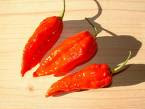
London, May 13 (ANI): Scientists have developed a new device that takes the help of carbon nanotubes to provide an objective and cost effective way to rate how hot a particular chilli is.
According to a report in Nature News, Richard Compton, a chemist at the University of Oxford, UK, and his colleagues have made the device, which measures the accumulated concentrations of the capsaicins in a chilli simultaneously.
Capsaicins are chemicals, which cause the hotness in a chilli. The higher the concentration, the hotter a chilli tastes.
The conventional method to determine the heat of a chilli or chilli sauce was devised in 1912 by chemist Wilbur Scoville.
Scoville ratings are worked out by diluting a chilli-containing sauce to the point at which a team of five expert tasters can no longer detect the heat.
But Richard Compton and his colleagues have developed a way to get a Scoville rating for a sauce while sparing the tasters tongues, and without blowing a cooks budget.
The device that they have developed measures the accumulated concentrations of the capsaicins in a chilli simultaneously.
The technique involves coating electrodes covered in carbon nanotubes with the chilli sample. The nanotubes have a high surface area, which means that they can absorb lots of the sample.
The whole device is then dunked in an ethanol-based solution to oxidize the capsaicins, which causes current to flow.
Stronger chillies mean more electric current, said Compton.
According to Compton, his method is cheaper than the only other available tester-free method, called high-pressure liquid chromatography (HPLC).
The HPLC technique involves separating out the capsaicins in a sauce and working out their concentrations individually an expensive process.
By using mass-producible electrodes screen-printed with carbon nanotubes, Compton reckons he can bring down the cost of a sampler to around 30 pounds. By comparison, an HPLC machine costs around 40,000 pounds.
Compton has applied for a patent for his device and is attracting commercial interest for what he envisages as a cheap, disposable hand-held heat detector that keen cooks could use in their own kitchens. (ANI)
with thanks to Thaindian news
Friday, July 3, 2009


Friday, June 26, 2009
Hot chilli grenades
Indian defence scientists are planning to put one of the
world's hottest chilli powders into hand grenades.
They say the devices will be used to control rioters and in counter-insurgency operations.
Researchers say the idea is to replace explosives in small hand grenades with a certain variety of red chilli to immobilise people without killing them.
The chilli, known as Bhut Jolokia, is said to be 1,000 times hotter than commonly used kitchen chilli.
Scientists at India's Defence Research and Development Organisation (DRDO) are quoted as saying the potent chilli will be used as a food additive for troops operating in cold conditions.
And the powder will also be spread on the fences around army barracks in the hope the strong smell will keep out animals.
Other forms of pepper spray are commonly used for crowd control in many parts of the world.
Story from BBC NEWS:
http://news.bbc.co.uk/go/pr/fr/-/2/hi/south_asia/8119591.stm
Published: 2009/06/25 17:54:10 GMT
Indian defence scientists are planning to put one of the
world's hottest chilli powders into hand grenades.
They say the devices will be used to control rioters and in counter-insurgency operations.
Researchers say the idea is to replace explosives in small hand grenades with a certain variety of red chilli to immobilise people without killing them.
The chilli, known as Bhut Jolokia, is said to be 1,000 times hotter than commonly used kitchen chilli.
Scientists at India's Defence Research and Development Organisation (DRDO) are quoted as saying the potent chilli will be used as a food additive for troops operating in cold conditions.
And the powder will also be spread on the fences around army barracks in the hope the strong smell will keep out animals.
Other forms of pepper spray are commonly used for crowd control in many parts of the world.
Story from BBC NEWS:
http://news.bbc.co.uk/go/pr/fr/-/2/hi/south_asia/8119591.stm
Published: 2009/06/25 17:54:10 GMT
Wednesday, June 10, 2009
KEFIR.....AND .....KEFIR LADY

KEFIR
About seven years back, I was asked by a famous Food writer in India to write for her on Yogurt, Curds and like. This was to be written as a ghost writer.I flatly refused her offer. But I started working on the same out of sheer personal interest. That is when I came across "Kefir"
I was so much taken in by the sheer material available on internet, that I wanted to give it a go. Unfortunately, nobody had heard about kefir in India and getting kefir starter was just out of question. One must understand that India , is a strongly Yogurt loving country.Nothing else can dislodge curd/yogurt from its position on the culinary menu.
Getting kefir grains from Dom from OZ was out of question. I mailed a lady friend in Portugal Mrs. Ivete Ramos to send me some grains which she kindly did and thus started my affair with kefir. For some time, it was good going and I also established a kefir club but my endevour was cut short due to some quirk of fate and pollution. My grains got spoiled and immediately thereafter, I moved to US for good.
After coming over to US, recently I had to get filling of my tooth to be re done. My dentist put me on a week's course of antibiotic for a tooth job and forgot to prescribe any probiotics. I had the worst attack of candida infection due to this and suffered badly for couple of weeks.
Suddenly I remembered Kefir. I tried commercially available brands owned by a Chicago based company. But it was missing that "zing" and taste that real kefir from grains give you. A week's usage did not help much.I started mining the web-mines. Well , google is next to God and again I was looking at thousands of sites on my monitor all claiming to give you the best starter.
As a hardened marketing man , I always read between the lines. I rejected almost every single website that offered magical grains.
All of a sudden, I came across a simple, no nonsense, matter of fact website of "Kefir Lady" from Ohio. I read through her account carefully and one sentence that caught my eye was, "Kefir attracts honest people so it is not necessary to prepay."!!!
Something told me that this person is the one whom everyone must trust for giving the "REAL" grains.
Herez her website address,
http://www.kefirlady.com/
I shot off a mail to her and pronto, by next wednesday, I got wonderfully healthy fat kefir grains. Immediately I fed fasting and hungry kefir grains with whole milk (warmed to 30 C) and very next day, my first batch of wonderfully bubbling tasty kefir was ready. I immediately put myself on thrice a day dosage of kefir and within three to four days, My stomach came back to normal. My tooth infection disappeared and I became better than normal in no time.It is about three weeks since the kefir factory is churning out wonderful kefir on daily basis.
I am a stickler for perfection and hence I make my kefir , the old traditional way. I do not use metal at any point. I also do not use my hands to handle kefir grains. I use Nylon plastic strainer and plastic spoons. I use only neutral glass jar and bowls.
Enough about me and myself. Let us talk about the great Kefir lady in lime light.
I am reproducing her interview with Dawn as under .
Marilyn, the Kefir Lady, resides in Ohio on her farm where in addition to making and selling kefir (I purchased all my grains from Marilyn), she raises chickens, mice, ducks and goats (she has 50 adult goats ranging in size from the small Nigerian Dwarf goats to mid-size mini breeds to the giant Saanen). Marilyn, has been making kefir off and on for 35 years, and was kind enough to fill me in on how she got into kefir, and why the "organic" label doesn't cut it. Keep reading to learn more about Marilyn and how she got into all this kefir.
1. When did you learn about kefir? Or what got you involved in making kefir?I learned about kefir when I was working at Zerbo's Health Food store in Livonia, Michigan in 1975. Back then the brand was Alta Dena. I just loved it. One day one of Mr. Zerbo's customers, an elderly lady, gave me some kefir grains in a jar. She said to put milk over them, strain them out the next day. Use them over. Those were my only instructions. I laugh at all the questions and problems people seem to have with their kefir on account of all the conflicting advice on the internet. They deviate from those simple instructions. I tell people there are a hundred ways to make kefir and unless you understand all about fermentation you could run into trouble. I teach the one best way. Don't deviate from that and you will be successful every time.
It wasn't long before we moved 100 miles away from Detroit to a small town called, Waldron. I thought I had moved to the country because they let you have farm animals there. I immediately bought chickens, goats, and Sheltland Sheepdogs for herding the goats. We had two children, the second one a home birth. I raised kefir grains on the goat milk and sold them to Amish and other health minded people. We raised goats for about 10 years then sold them all. As our two home schooled children got older I realized that I didn't want them around the influence of the children in town, which is part of the reason they were home schooled. I knew I had to move to country. That's when ear candles came into my life and how I made my fortune and be able to afford the place where we live now in Fayette, Ohio.
When this place in Fayette was nearly paid for, the FDA did one of their infamous raids on my business. I went underground after that and for the next four years I sold "birthday candles". What you do with them is your business. That worked without a problem for three years. Since the FDA works for corporations that can't stand competition, they had an undercover agent buy my birthday candles for a whole year gathering exculpatory evidence against me that I was still selling ear candles, which according to the Food, Drug, and Cosmetic Act is an adulterated and mis-branded medical device. The final blow to my candle business came in 1997 when the FDA hired the Justice Department against me. I was done and signed their consent decree stating I would not make, sell, store, distribute and on an on any ear candles or anything that resembles an ear candle.
Now I had all this time and no income. What could I do for a cottage industry? A friend of mine wanted to start drinking kefir and wanted my help locating some kefir grains. I knew exactly where to look. The internet! So I bought some kefir grains from Adnan from Toronto, author of the kefir grain exchange website. Later I bought some from Dom in Australia. Most of the kefir grains I now distribute are the offspring from the kefir grains I got from Dom.
2. What is your favorite kefir drink?I like it plain, of course. But I also like it with a little orange juice concentrate stirred in. The drink I have every day is 8 ounces kefir, a couple tablespoons of orange juice or cherry juice concentrate, 1 tablespoon each of spirulina, chlorella, Red Star Nutritional Yeast, and Beet powder. I blend it in my Bullet. I also make a whole vegetable juice with frozen cucumbers, greens, soaked dried fruit for sweetness, with kefir as a base. I blend that in my BlendTec.
3. Do you notice a difference between goat and cow's milk in kefir? Which do you prefer and why?There is a big difference between goat milk and cows milk so naturally the kefir will be different too. Goat milk kefir is always smooth. And depending on the breed of goat, it can be very creamy. I have goats that range from 2% butterfat to 8%. The little goats are the ones that make the denser milk, good for cheese and butter, and very rich, thick kefir. But most goat kefir is quite thin. That's because the standard size breeds don't have the milk solids or butterfat of the small and mini breeds.
Goat kefir goes through the strainer quicker so saves me lots of time when I am straining six gallon size jars of kefir at 5:30 in the morning before the goats come up to be milked. When I had my cow, the process would take hours for that many jars. Sometimes I'd spend ten minutes getting all the thick curds to go through the strainer for one jar. I had a Jersey cow and the kefir was very thick. I am glad I switched to goats. The smaller curd size of goat milk makes straining easy. Some people don't like that goat milk kefir doesn't get very thick. I always say to go by taste, never thickness.
And of course, raising goats is a delight compared to a cow. I like to get people started in raising their own goats. They are so much easier to handle than a cow. The males are not dangerous as are bulls. One of the best things I love about goats is that they are always clean, even in muddy spring weather. I hope not all cows are like this, but my cow didn't care if she laid in mud and there was always mud for her to lie down in. All summer she was in the mucky pond. Goats don't like to get their feet wet, so they stay out of the pond. Goats are also easier on the pasture.4. Did you notice a difference in your immune system after drinking kefir regularly?I was born sickly. I got interested in taking responsibility for my own health when I was sixteen when I read the book, "Let's Eat Right to Keep Fit" by Adelle Davis. I had no idea before reading that book that ill health was not genetic. So every change I made in diet and lifestyle made a difference. I started drinking kefir at such a young age that I didn't get to experience any of the drugs people take for digestive issues. I know I prevented tons of gut issues because many of my peers live on Tums until they start drinking kefir regularly.
5. What's your diet like day to day?My diet is 90% raw, including raw eggs, raw milk, some raw meat, raw cheese, raw vegetable salads, fruit, some steamed vegetables. I also eat cooked chicken, lamb, goat meat, and turkey. I pretty much only eat meat that I raised myself. I use coconut oil and raw goat butter I make myself. I drink kombucha tea and some water kefir. Whatever is in season, that's what I eat. I've been eating steamed asparagus every day for the last two weeks. Pretty soon here I'll be going on a mulberry and gooseberry diet. Not really, but you get the idea.
6. You mentioned you don't trust "organic"- why?Most of the milk labeled "organic" is from confined cows eating organic grain. Cows should be allowed to graze. They should not eat grain. So I am not impressed that the grain they eat is organic. Also a lot of this "organic" milk is pasteurized at ultra high temps. I call it ultra dead milk. If it was ever organic, it sure isn't after it's been cooked like that. The word "organic" used to mean raised and packaged in a healthy manner.
7. How long have you had your goats and how much milk do they produce? What do they eat?I milk 12-14 goats every morning. It varies because some still have kids on them. They give me plenty of milk for my kefir grains, cheese and sweet milk.
My goats get dairy quality alfalfa hay, free choice minerals, free choice kelp, fresh water with a radioactive stone in it from nighthawkminerals.com. They get kefir soaked barley on the stanchion when I milk them, which I call goatiola. I make wheat sprouts for them every day using ocean solutions, which is concentrated sea water for soaking and watering. You dilute it down 100 to one for farming and hydroponic situations. I would like to elaborate on that if you don't mind.
Good health is about getting all the minerals in the proper balance including trace minerals. Most farming methods only put back 3.and they call it NPK. Most hydroponic solutions have about 16 minerals in them. But there are 90 minerals that plants need. The only place you will find all the minerals and in the proper balance is in ocean water. This is why ocean animals do not age or get sick as virtually all land animals do. Every plant takes up a certain variety of minerals according to its nutritional needs. For example, tomatoes take up precisely 56 minerals if given the opportunity. They are always the same ones. But a tomato plant cannot get the minerals If they are not in the soil. That's why the out of season tomatoes in the store taste like cardboard. The winter greenhouse tomatoes are getting precisely 12 minerals. The plants are beautiful and make tomatoes but by not giving the plants ALL the minerals they require makes them have weak immune systems that attract pests and fungus.
It is gratifying to make wheat sprouts for the goats because it just so happens that wheat grass is one of the only plants that take up all ninety minerals. My sprouting method using ocean solutions insures they are getting these minerals. Oceangrown.com originally contacted me because one of my customer called them asking if their ocean solutions would be good for water kefir grains. In the course of the conversation they discovered my love of gardening, hydroponics, sprouting, and farming. I was already thoroughly familiar with Maynard Murray's work and sea solids. Acres, USA has published a couple books on this topic.
Ocean Grown asked me to become a distributor. I am thrilled to be given the opportunity to offer farmers in my area an inexpensive solution to chemical farming. Superior fertilizer in the form of ocean water is now available for every garden, hayfield, pasture, orchard, and farm. I guarantee there will be a huge difference in flavor. Everybody that sprouts for their poultry and dairy animals can now offer the best of the best.
8. What is sweet milk?Sweet milk is milk fresh from the cow, sheep, or goat. It has not been cultured or made sour.
9. Why is raw milk better than pasteurized milk?Raw milk is easily digested and comes with its own lactobacilli and other friendly bacteria. Pasteurized milk has been cooked to the point of damaging protein and fats making it very mucus forming and hard to digest. This makes people think they are allergic to milk. But what they are drinking is not milk at all, but adulterated milk product. I'm serious. The way the label laws are written, that white liquid you buy in the dairy section should not be allowed to be called milk because of how it has been processed. They take it all apart and put it back together in order to get skim, 2%, 3.5% also called whole milk. It goes through a heat process several times. It also goes through a process to remove pus because almost half the cows in this country have sub-clinical mastitis. One thing I can say for regular grocery store milk is that there are no antibiotic residues in the milk. They are strict about that. That means if that is all you can get, your kefir grains will do fine in pasteurized milk, prospering and growing and making probiotics for you.10. Do you need allot of room to raise goats? A couple years ago I sold a couple of mini-Nubian does to a family in Ypsilanti, Michigan. They have 1/8 acre right in town. They are exercising Michigan's "your right to farm" law. I only have 8 acres and 2 acres of that is a pond. All you need is a small barn for shelter and hay storage, good fencing and goat proof latches on your gates because they love to try to escape. You don't really need that much room for a few goats. And unless you need gallons of milk every day, I'd recommend one of the easier to handle mini breeds. You get 1/2 the feed bill and 3/4 the milk.
11. Any other tips?Keep your kefir making process simple. Keep your culture jar at room temperature and out of the refrigerator. Cold temps make kefir grains go out of balance. Give your kefir grains the amount of milk they can handle in 24 hours, tasting every time so you can adjust the milk for the next batch. You may have to remove some kefir grains from time to time or they will eat you out of house and home. Seek out raw milk or move to the country and get your own dairy animal. Don't let any man tell you that you cannot or should not drink raw milk. Know your source. Buy local. Support small farms.
Thank you Marilyn for taking the time to answer my questions. It is great to be able to share your knowledge with others!
POSTED BY DAWN AT 11:00 AM SHARETHIS.
My reader friends are all internet savy. If you want to know about health benefits of Kefir, tons of info is available on the net and is available on click of a mouse.
HAPPY KEFIRING"
Wednesday, April 8, 2009
MY FIRST ENCOUNTER WITH VERY HOT CHILLI PEPPERS AT KOVURU


For a village boy of about 8 years, I was thin and frail looking contraption.Two sticks struck on a torso were my hands and two twigs stuck under served as by legs.Coming to face, I was like ol'man/boy Benjamin Button and was known as "Budhho" meaning old man.
Even though my grandfather was known to down a spoon or two of hot chilli powder with lentils, all of us, the rest of the family comprising of my widowed aunt, another widowed lady and three of us brothers, were medium hot food eaters.
It was in 1957 summer, that we went to Rajahmundry which falls in Hottest region (chilli pepper growing and consumption wise)of India. World's biggest chilli pepper market is not much far from there in Guntur.My uncle who was elder to my father , lived plumb on Godavari river opposite of Godavari station.
We would spend hours looking at sail boats slowly crossing the river and coming back from Kovur on opposite bank. Kovur was a very small village then. My elder brother Dilip bhai was the most naughty of my siblings and had an adventurous streak .
Since we had never sailed in a boat, he asked and got permission from my uncle to cross the river in a boat.The charges to cross the river were 2 paise per head. It roughly translates into 0.0004 USD.Actually, he was not interested in sailing across the river but he wanted to eat Idly Dosai in road side eatery in Kovur. He had about 4 annas in his pocket that would have bought us two days of food for all the three of us.
We set sail on a roughly two mile trip to Kovur. After about 45 minutes, we reached the opposite bank at Kovur.The boatman informed us that we would be sailing back immediately as a lot of people were waiting to be ferried back.My elder brother ran to the nearest Idly vendor lady who was dishing out steaming puffed rice-lentil steamed cakes with fresh coconut chutney.The smell was heavenly and we were hungry.
Each of us took two huge idlies and a big dollop of Coconut chutney in Banana Leaf and scurried back to the boat.No sooner the boat sailed back, we opened our steaming packets and started the first hottest encounter of our very young lives.I took a huge bite of steaming hot idly first and was pleasantly shocked to taste its warm loving taste.Next I took a piece and liberally spread the coconut chutney on it and put the heavenly smelling piece in my mouth.I felt a bit hot but enjoyed the first encounter.I took another in less than five seconds when the searing heat hit me like a flame of volcano.I was neither able to spit out nor able to swallow.My face went red and I could almost see my smoking ears through my tears filled eyes.With great difficulty, I ate just 1 idly. Condition of my brothers were not much different.My younger brother started howling. We threw the remaining Idlies in river Godavari for fish to have a feast.There was no water with us and our hands could not reach the sweet water running beneath us and around us.The boatman and his helpers started laughing . He took pity on us and gave us tumblerful water each , fresh from the river.
By the time we reached the home shore , we were all on fire and crying. My elder brother had warned that we should not say anything about eating Idlies because we belong to priest class and we were not supposed to eat road side food.On reaching home, our faces and crying eyes told the story to everyone that something was wrong.My brother reeled off a story that we were mortally afraid that we would sink in the river and were afraid so we were crying.
Since people were not interested in children due to a religious event that was to be held the other day, we were not grilled to get at the truth.
The heat subsided after about three hours but again raised its head the next day when we went to the loo.
Since that time, I came to know that Andhra people make coconut chutney with just two ingredients. Hot green Sannam peppers and same amount of Coconut by weight.
I still remember my plight after 52 years.
Even though my grandfather was known to down a spoon or two of hot chilli powder with lentils, all of us, the rest of the family comprising of my widowed aunt, another widowed lady and three of us brothers, were medium hot food eaters.
It was in 1957 summer, that we went to Rajahmundry which falls in Hottest region (chilli pepper growing and consumption wise)of India. World's biggest chilli pepper market is not much far from there in Guntur.My uncle who was elder to my father , lived plumb on Godavari river opposite of Godavari station.
We would spend hours looking at sail boats slowly crossing the river and coming back from Kovur on opposite bank. Kovur was a very small village then. My elder brother Dilip bhai was the most naughty of my siblings and had an adventurous streak .
Since we had never sailed in a boat, he asked and got permission from my uncle to cross the river in a boat.The charges to cross the river were 2 paise per head. It roughly translates into 0.0004 USD.Actually, he was not interested in sailing across the river but he wanted to eat Idly Dosai in road side eatery in Kovur. He had about 4 annas in his pocket that would have bought us two days of food for all the three of us.
We set sail on a roughly two mile trip to Kovur. After about 45 minutes, we reached the opposite bank at Kovur.The boatman informed us that we would be sailing back immediately as a lot of people were waiting to be ferried back.My elder brother ran to the nearest Idly vendor lady who was dishing out steaming puffed rice-lentil steamed cakes with fresh coconut chutney.The smell was heavenly and we were hungry.
Each of us took two huge idlies and a big dollop of Coconut chutney in Banana Leaf and scurried back to the boat.No sooner the boat sailed back, we opened our steaming packets and started the first hottest encounter of our very young lives.I took a huge bite of steaming hot idly first and was pleasantly shocked to taste its warm loving taste.Next I took a piece and liberally spread the coconut chutney on it and put the heavenly smelling piece in my mouth.I felt a bit hot but enjoyed the first encounter.I took another in less than five seconds when the searing heat hit me like a flame of volcano.I was neither able to spit out nor able to swallow.My face went red and I could almost see my smoking ears through my tears filled eyes.With great difficulty, I ate just 1 idly. Condition of my brothers were not much different.My younger brother started howling. We threw the remaining Idlies in river Godavari for fish to have a feast.There was no water with us and our hands could not reach the sweet water running beneath us and around us.The boatman and his helpers started laughing . He took pity on us and gave us tumblerful water each , fresh from the river.
By the time we reached the home shore , we were all on fire and crying. My elder brother had warned that we should not say anything about eating Idlies because we belong to priest class and we were not supposed to eat road side food.On reaching home, our faces and crying eyes told the story to everyone that something was wrong.My brother reeled off a story that we were mortally afraid that we would sink in the river and were afraid so we were crying.
Since people were not interested in children due to a religious event that was to be held the other day, we were not grilled to get at the truth.
The heat subsided after about three hours but again raised its head the next day when we went to the loo.
Since that time, I came to know that Andhra people make coconut chutney with just two ingredients. Hot green Sannam peppers and same amount of Coconut by weight.
I still remember my plight after 52 years.
The above photograph shows the old bridge exactly as it was 50 years back and is taken from river bank just besides where our house was.
Thanks to Chaitanaya K
Sunday, March 22, 2009
UNIQUE RECIPE.......I love the style
Gary's Salsa Godzilla Brand Habañero Sauce
Version 1.3(makes enough to alienate all your friends twice)

DIRECTIONS:
Plug in the iron and turn it to the steam setting. Use a kitchen match to ignite the briquette, put the match out on the tip of your tongue. Remove the stems from the chilies and toss the chilies into a blender. Light the remaining kitchen matches on your teeth, putting them out as before. Add the garlic, onion, sea salt and water to the blender. Do your doggone best to swallow the fishhook. Set the Blender to frappé and fire that mother up. Gargle 1/2 cup battery acid but don't swallow any cause we don't want none of that macho crap here. Stop often to scrape the sides of the blender with a rubber spatula. Use the charcoal briquette to heat up the bolt to a cheerful cherry red then pick the red hot bolt up with your lips. You need to blend the ingredients in the blender for four or five minutes, until the chiles are completely liquefied. You can take this opportunity to see if the iron is ready by firmly pressing the flat of your tongue to it. Turn off the blender and pour the liquid into a small bottle. Extinguish the charcoal briquette by smothering it in your mouth. Turn off the iron. Refrigerate the habañero sauce between usage, and when you use this stuff, please try not to get any of it in your mouth!!
OK OK the REAL Directions:
Add the ingredients to a blender and blend on medium until smooth. Stop the blender occasionally and push down the chili sauce that has been splashed onto the side of the blender carafe with a spatula. This will probably take about 5 minutes. When fully blended, remove the carafe and hold it between your hands. Swirl the contents against the side of the container to remove all the bubbles. That's all there is to it!
Put this into one of those 5 ounce bottles of store bought pepper sauce such as Tapatio hot sauce. It has a plastic stoppered mouth with a small shaker hole that is a great way to apply this sauce to your food. Just pour the store bought swill down the drain and wash the bottle out. You can reuse the same bottle for years. You should have some room left in the bottle, top it off with more distilled water. If the sauce is too thick once chilled, add more distilled water when there is room. Once mixed, keep the bottle of sauce refrigerated between uses. Shake before using.
Double the recipe and put it into a 10 oz. bottle if you are insane like me.
Version 1.3(makes enough to alienate all your friends twice)

INGREDIENTS:
1/4 Oz. Dried habañero chiles. (This is the size package common in stores)
1/4 Oz. Dried habañero chiles. (This is the size package common in stores)
1/2 Tsp onion powder or the white section of one green onion.
3-4 Medium garlic cloves
1/4 Tsp sea salt
5 oz. Distilled water
1 Dozen strike anywhere kitchen matches.
1 #4 Grappling style fish hook.
1/2 Cup battery acid
1 Matchlite charcoal briquette.
1 G.E. Laundry iron.
1 1/2" X 4" Machine bolt.
DIRECTIONS:
Plug in the iron and turn it to the steam setting. Use a kitchen match to ignite the briquette, put the match out on the tip of your tongue. Remove the stems from the chilies and toss the chilies into a blender. Light the remaining kitchen matches on your teeth, putting them out as before. Add the garlic, onion, sea salt and water to the blender. Do your doggone best to swallow the fishhook. Set the Blender to frappé and fire that mother up. Gargle 1/2 cup battery acid but don't swallow any cause we don't want none of that macho crap here. Stop often to scrape the sides of the blender with a rubber spatula. Use the charcoal briquette to heat up the bolt to a cheerful cherry red then pick the red hot bolt up with your lips. You need to blend the ingredients in the blender for four or five minutes, until the chiles are completely liquefied. You can take this opportunity to see if the iron is ready by firmly pressing the flat of your tongue to it. Turn off the blender and pour the liquid into a small bottle. Extinguish the charcoal briquette by smothering it in your mouth. Turn off the iron. Refrigerate the habañero sauce between usage, and when you use this stuff, please try not to get any of it in your mouth!!
OK OK the REAL Directions:
Add the ingredients to a blender and blend on medium until smooth. Stop the blender occasionally and push down the chili sauce that has been splashed onto the side of the blender carafe with a spatula. This will probably take about 5 minutes. When fully blended, remove the carafe and hold it between your hands. Swirl the contents against the side of the container to remove all the bubbles. That's all there is to it!
Put this into one of those 5 ounce bottles of store bought pepper sauce such as Tapatio hot sauce. It has a plastic stoppered mouth with a small shaker hole that is a great way to apply this sauce to your food. Just pour the store bought swill down the drain and wash the bottle out. You can reuse the same bottle for years. You should have some room left in the bottle, top it off with more distilled water. If the sauce is too thick once chilled, add more distilled water when there is room. Once mixed, keep the bottle of sauce refrigerated between uses. Shake before using.
Double the recipe and put it into a 10 oz. bottle if you are insane like me.
I loved the presentation so much that even without getting the permission to re publish, I posted this recipe on my blog.Thanks Gary for your sense of humor and the recipe.
Saturday, March 14, 2009

‘Chilli girl’ Anandita makes it to Shabash India
By A Staff Reporter GUWAHATI, Aug 2 –
When, as a five-year-old, she used some mild chilli preparations to cure a disorder of the tongue, little did she know that it would one day catapult her to fame and stardom. Anandita Dutta Tamuly’s claim to fame rests on this rather scary knack of relishing red-hot chillis in their dozens – the very thought of which is enough to make most of us go weak on our knees. Her love affair with chillis is not just confined to munching mouthfuls of Naga/Bhoot jalakia – the hottest known variety – but also smearing her eyes with its juice. Just back from the shooting of Zee TV’s Shabash India, which features extraordinary and bizarre feats by Indians, Anandita, a mother of a toddler, gave ample demonstration of her remarkable exploits before a jam-packed audience at the Swahid Nyas Bhavan today. She finished some 40 chillis in no time at all – and without the least indication of any discomfort. And followed it up by applying some more to her eyes, drawing a thunderous applause from the wide-eyed onlookers. For the Shabash India episode, which is scheduled for telecast at 10-30 pm on August 29, Anandita gobbled up a record-shattering 60 red-hot chillis in just a couple of minutes besides applying another dozen to her eyes in one minute. “The support and encouragement from my family, friends and well-wishers apart, I am thankful to the people of the State for giving me the motivation to take part in the programme and establish the record,” a modest Anandita said. Her next goal is the Guinness record, the ultimate aspiration of all record-setters. “After we had contacted the Guinness authorities, they asked me to give a demonstration of my abilities in the Guinness headquarters in London. However, financial constraints have affected my plan to perform there, as the whole exercise involves substantial expenditures. But with the blessings of the people and support from committed organisations, I do hope to set a mark at Guinness in the near future,” Anandita said. On her uncanny appetite for chillis, Anandita said that it began when she took some preparations made of chill to cure a sore on the tongue. “I was about five or six then, and after that incident I developed this unusual taste for eating chillis. Gradually I realized that I could eat even the hottest of chillis in great numbers,” she said.Did this practice ever affect her health, particularly her digestive system? “No, rather I can say that I have never experienced any stomach-related problems, and my overall health, too, is quite sound,” Anandita said. Before the demonstration, Anandita was accorded a warm felicitation by the All Assam Students Union (AASU) and Marwari Yuva Manch. Also present were a number of distinguished citizens including musician Ramen Baruah, veteran sports organiser Pulin Das and Khanindra Das, a leader of the Assam agitation besides Pankaj Tamuly, Anandita’s husband. Lauding her, AASU adviser Dr Samujjal Bhattacharya said Anandita was doing her motherland proud by her extraordinary feat. “The AASU will always be with her so that she can bring more glory for the State and the country,” he said.Anandita may very well become the first person from the State to etch her name in the famed Guinness Book of World Records, provided she gets the necessary support. People feel that the State Government and various social organizations should lend a helping hand to this young achiever in realizing her ultimate goal.
Wednesday, February 25, 2009
MORE ON "PAIN MANAGEMENT"
Hot chillies can help mitigate pain
25 Feb 2009, 1858 hrs IST, ANI
WASHINGTON: Capsaicin, the active agent in spicy hot chili peppers, often acts as an irritant, but it may also be used to reduce pain.
Feng Qin, associate professor of physiology and biophysics at the University at Buffalo School of Medicine, and Jing Yao used capsaicin to unravel how pain-receptor systems can adapt to painful stimuli. For example, adaptation happens when your eyes adjust from a dark movie theatre during a matinee to the bright sunlight outside. Whether pain receptors truly adapt or rescale their responses (versus simply desensitising) has been an open question. Scientists had previously linked the analgesic or pain-relieving effects of capsaicin to a lipid called PIP2, found in cell membranes. When capsaicin is applied to the skin it induces a strong depletion of PIP2 in the cell membrane. "The receptor acts like a gate to the neurons," said Qin. "When stimulated it opens, letting outside calcium enter the cells until the receptor shuts down, a process called desensitisation." "The analgesic action of capsaicin is believed to involve this desensitization process. However, how the entry of calcium leads to the loss of sensitivity of the neurons was not clear," he said, according to a Buffalo release. Capsaicin creams are commonly sold over the counter as effective treatment for a variety of pain syndromes, from minor muscle or joint aches to those that are very difficult to treat, such as arthritis and neuropathic pain
Posted with thanks from ANI
25 Feb 2009, 1858 hrs IST, ANI
WASHINGTON: Capsaicin, the active agent in spicy hot chili peppers, often acts as an irritant, but it may also be used to reduce pain.
Feng Qin, associate professor of physiology and biophysics at the University at Buffalo School of Medicine, and Jing Yao used capsaicin to unravel how pain-receptor systems can adapt to painful stimuli. For example, adaptation happens when your eyes adjust from a dark movie theatre during a matinee to the bright sunlight outside. Whether pain receptors truly adapt or rescale their responses (versus simply desensitising) has been an open question. Scientists had previously linked the analgesic or pain-relieving effects of capsaicin to a lipid called PIP2, found in cell membranes. When capsaicin is applied to the skin it induces a strong depletion of PIP2 in the cell membrane. "The receptor acts like a gate to the neurons," said Qin. "When stimulated it opens, letting outside calcium enter the cells until the receptor shuts down, a process called desensitisation." "The analgesic action of capsaicin is believed to involve this desensitization process. However, how the entry of calcium leads to the loss of sensitivity of the neurons was not clear," he said, according to a Buffalo release. Capsaicin creams are commonly sold over the counter as effective treatment for a variety of pain syndromes, from minor muscle or joint aches to those that are very difficult to treat, such as arthritis and neuropathic pain
Posted with thanks from ANI
Subscribe to:
Posts (Atom)